1 month ago
 SHARE
SHARE
SHARE
ON-DEMAND
Preventive Maintenance Is Not Cheaper. It Is Earlier.
Most businesses do not ignore maintenance because they do not care. They ignore it because nothing has failed yet. The equipment is running, the site is functioning, the lights are on and the complaints are manageable. Then one day the AC fails before an important meeting, a pump stops during operating hours, a DG set does not respond, a critical fixture breaks, or a technical fault disrupts employees, guests or tenants. Suddenly, maintenance becomes urgent, expensive and visible.
The research paper 'Improving Equipment Maintenance - Switching from Corrective to Preventative Maintenance Strategies' by Jye West, Milind Siddhpura, Ana Evangelista and Assed Haddad compares corrective maintenance and preventive maintenance in commercial building environments. Corrective maintenance fixes problems after they occur. Preventive maintenance aims to anticipate issues before failure. The paper discusses how maintenance strategy should consider reliability, failure frequency and downtime cost.
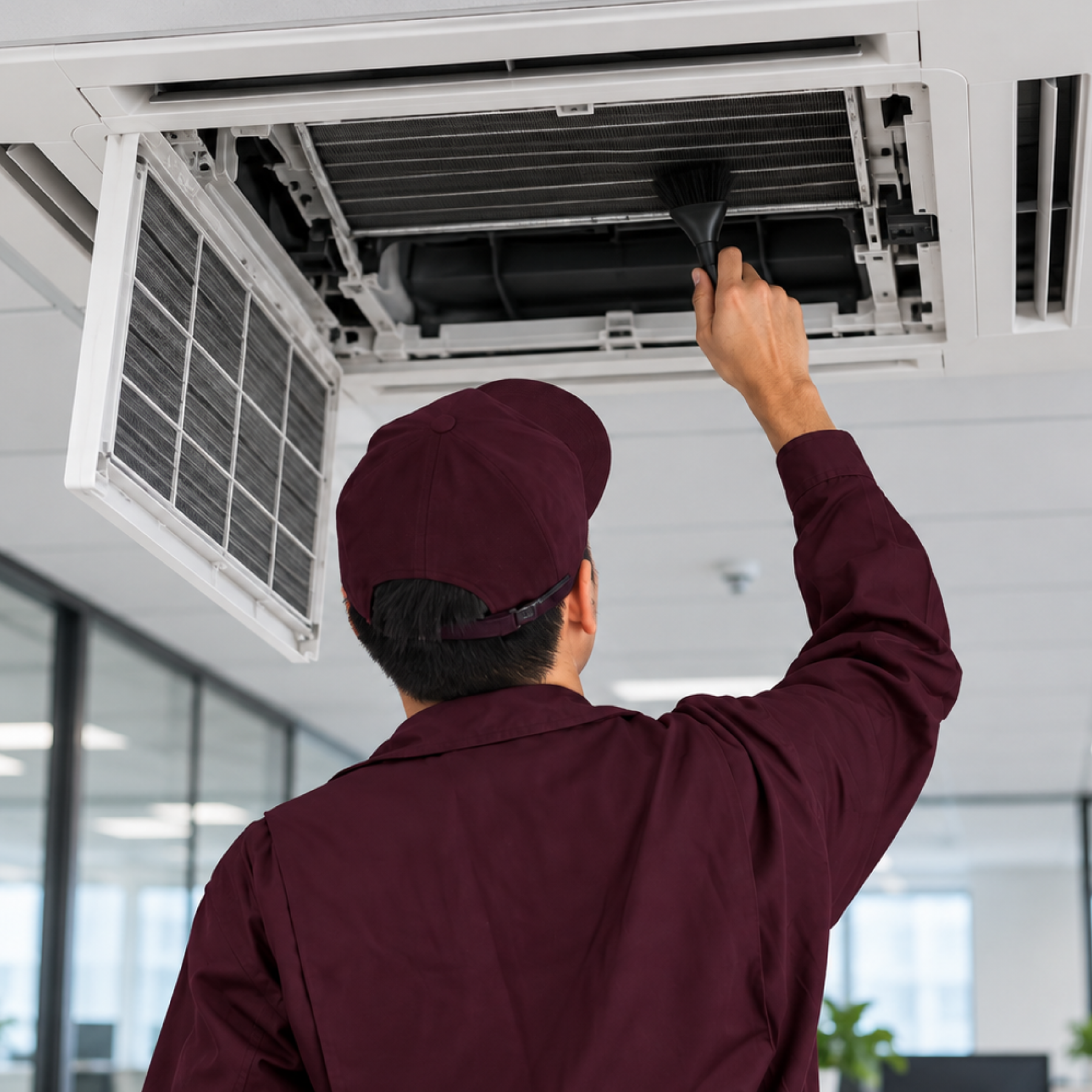
For corporate businesses, this is not theory. Every facility has assets that can quietly move from normal operation to business disruption: HVAC systems, pumps, panels, lifts, DG sets, kitchen equipment, water systems, fire systems, access systems and cleaning machines. When these assets fail, the impact is not limited to repair cost. It can affect employee comfort, guest experience, tenant satisfaction, safety, energy use and leadership confidence.
The dangerous mindset is 'call someone when it breaks'. This feels cheaper until the breakdown happens at the wrong time. Corrective maintenance often hides its real cost: downtime, emergency labour, premium spare parts, tenant complaints, event disruption, productivity loss and repeated failure. Preventive maintenance appears earlier in the budget, but it protects the business from uncontrolled timing.
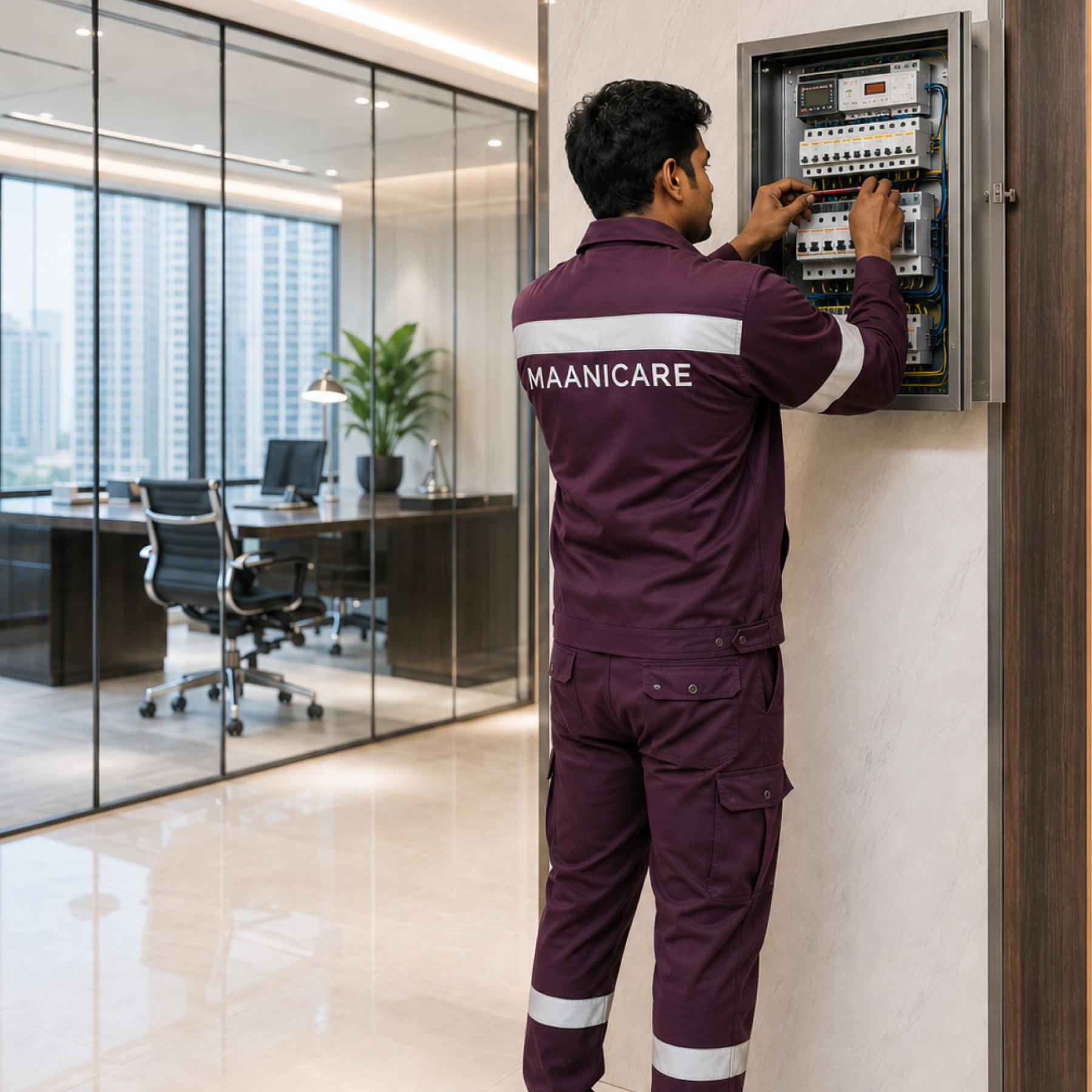
Maanicare applies this learning by making preventive maintenance part of the facility operating rhythm. We build asset registers, service calendars, inspection checklists, condition notes, breakdown logs, vendor coordination and review dashboards. The objective is to identify risk before it becomes disruption. A good PM system does not only say that maintenance was done. It records what was checked, what was observed, what needs attention and what action is pending.
For your business, implementation should begin with criticality mapping. Not every asset carries the same risk. Which equipment affects business continuity? Which assets support guest-facing areas? Which assets affect employee comfort? Which failures create safety or compliance risk? Which repairs have long spare lead times? Once criticality is clear, maintenance frequency and escalation can be designed intelligently.
Next, move from date-based maintenance to evidence-based review. Track failure frequency, downtime, repeated repairs, age, cost of emergency response and impact on operations. This allows your facility team to decide whether an asset needs more frequent inspection, replacement planning, vendor review or operational change.
Maanicare helps because we bring both response capability and preventive discipline. On-demand services are valuable when something needs urgent attention, but the deeper value is reducing how often urgent attention is needed. Our IFM and response teams can support repairs, planned maintenance, inspections, asset tracking and service documentation, giving corporate clients a clearer view of building health.
The fear is simple: equipment rarely fails when it is convenient. It fails during peak occupancy, leadership visits, tenant movement, audits, events, monsoon pressure or high-temperature days. Waiting for failure gives the asset control over your schedule. Preventive maintenance gives control back to the business.
For employees, guests and tenants, good preventive maintenance is invisible. They simply experience comfort, readiness and reliability. For leadership, it means fewer escalations. For facility teams, it means fewer emergencies. For finance teams, it means better planning. That is why preventive maintenance is not only an engineering habit. It is a business-protection strategy.
A practical preventive-maintenance model should separate assets by risk. Critical assets need stronger inspection, spares planning and escalation. Non-critical assets may need simpler routines. The point is not to maintain everything with the same intensity. The point is to maintain the right assets with the right frequency based on failure impact. Businesses should also review failure history, because repeated corrective repairs may indicate that replacement or deeper diagnosis is cheaper than continuous patchwork.
Maanicare helps by combining preventive maintenance with response capability. We can support planned inspections, urgent repairs, breakdown tracking, vendor coordination and review reporting. This is valuable because many businesses do not have the internal bandwidth to manage technical maintenance in detail. We help make maintenance visible before failure becomes visible to your employees, guests or tenants.
The implementation benefit is not only technical. It is managerial. Preventive maintenance gives leadership more predictable budgets, gives facility teams clearer schedules and gives occupants a more stable environment. It also creates evidence for audits, vendor reviews and replacement decisions. Maanicare helps convert maintenance from a panic response into a planned business-control process that supports continuity.
Do not wait for equipment failure to make maintenance important. Speak to Maanicare for preventive maintenance, breakdown response and asset-care systems that protect your workplace before disruption begins. Visit Contact Us .
Key learnings for corporate teams
- Corrective maintenance fixes failure; preventive maintenance reduces the likelihood and impact of failure.
- Maintenance strategy should consider reliability, failure frequency and downtime cost.
- Emergency repairs often hide costs through disruption, premium response and occupant dissatisfaction.
- Maanicare uses asset registers, PM calendars, inspections and breakdown logs to protect continuity.
- Preventive maintenance is not an expense ahead of time; it is control before failure chooses the timing.