3 weeks ago
 SHARE
SHARE
SHARE
PROJECTS
Your Fit-Out Is Not Delayed by One Trade. It Is Delayed Between Trades
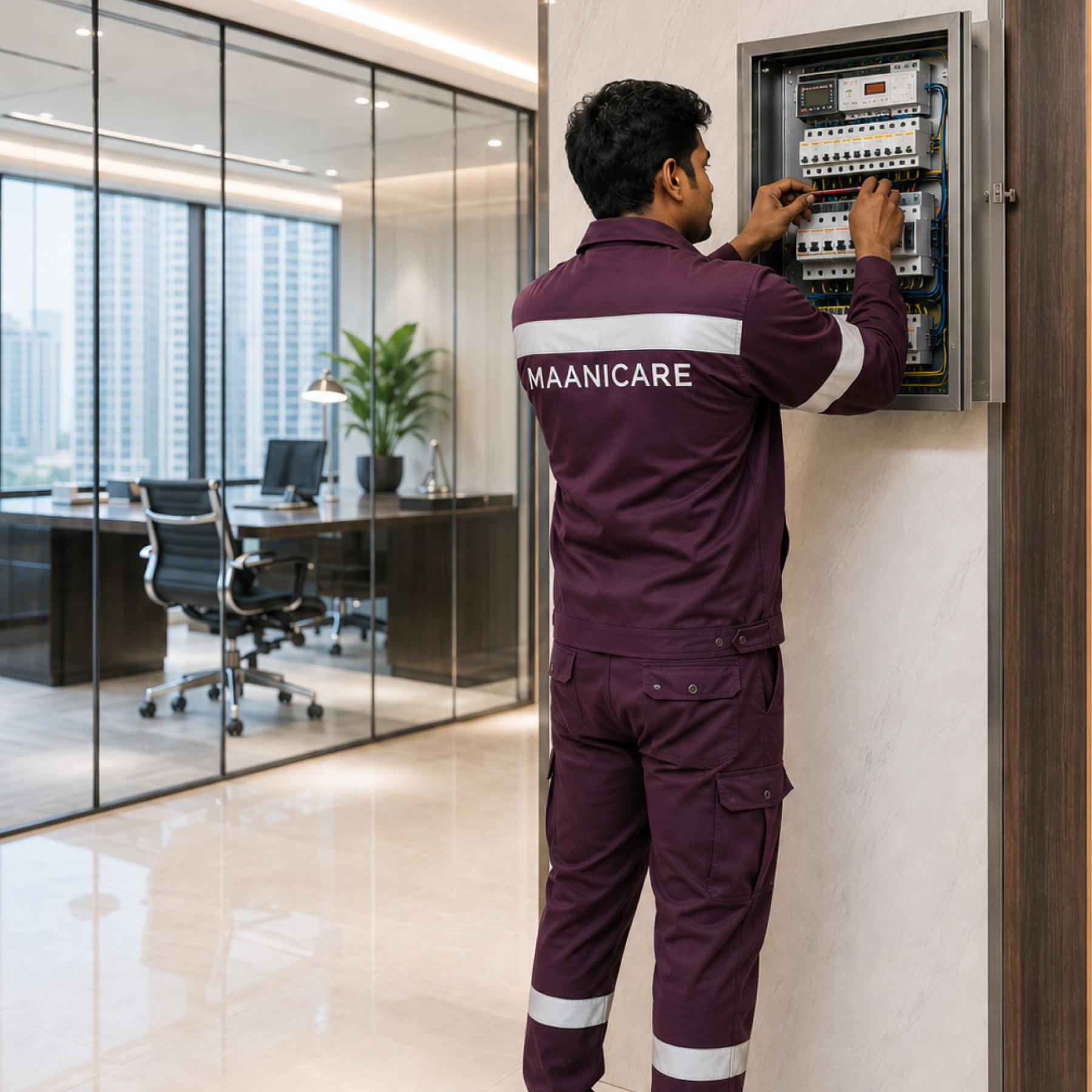
Most project delays do not begin with one trade refusing to work. They begin in the spaces between trades. Civil waits for the latest drawing. Electrical waits for ceiling access. HVAC waits for routing clarity. Joinery waits for site measurement. Flooring waits for protection. Painting waits for closure. The site looks active, but the project is losing time through waiting, rework and sequencing confusion.
The research paper 'Influence of Trade-Level Coordination Problems on Project Productivity' by Bon-Gang Hwang, Xianbo Zhao and Thi Hong Van Do studies how coordination problems affect project productivity. Although the study focuses on glass and metal curtain wall installation in Singapore, the lesson is highly relevant to corporate fit-outs and B2B projects: productivity is not only about labour strength. It is about coordination quality.
The paper shows that coordination problems can create significant waiting time and rework. In fit-out work, this is amplified because multiple trades operate in tight spaces, under tight timelines, with dependencies that change daily. One late design decision can hold multiple teams. One missing approval can freeze procurement. One service clash can reopen finished work. One poorly sequenced activity can damage completed finishes.
For corporate clients, the real cost of poor coordination is not just a delayed site. It is delayed business readiness. Your office migration may be pushed. Your employees may continue working in temporary arrangements. Your guest area may not be ready for a launch. Your tenant handover may be affected. Your leadership may spend time in escalation meetings instead of focusing on business.
Maanicare implements the research learning by managing fit-outs through integrated coordination, not isolated trade tracking. We connect design, QS, procurement, MEP, HVAC, civil, joinery, flooring, ceiling, finishing, QAQC and site supervision through one operating rhythm. This includes look-ahead planning, dependency tracking, drawing-release control, material status reviews, coordination meetings and escalation paths.
The important question is not whether each trade is busy. The important question is whether each trade has what it needs before it enters the work front. Does it have the latest approved drawing? Is the area released? Are materials available? Are previous trades complete? Are services coordinated? Is the next trade protected? If not, manpower becomes congestion, not productivity.
For your business, implementation should begin with dependency visibility. Every major work front should show prerequisites, responsible trade, pending decisions, material status, inspection requirements and next activity. A weekly programme is not enough if it does not show what can block execution. A project dashboard should highlight dependencies before they become excuses.
Maanicare helps by creating discipline between moving parts. Our project teams understand that the site is a chain. If one link is unclear, the whole sequence suffers. This is why technical coordination, factory readiness, procurement release, drawing control and site verification cannot be treated separately. Corporate fit-out delivery needs one aligned system.
The fear is clear: throwing more manpower at an uncoordinated site can make the project slower. More people in the wrong sequence create congestion, damage, rework and confusion. Speed does not come from urgency alone. Speed comes from sequence, clarity and ownership.
For employees, guests and tenants, good coordination is invisible. They do not see the look-ahead plan. They simply experience a space that is ready on time, finished properly and easier to operate. For leadership, the value is confidence: fewer surprises, fewer clashes, fewer excuses and a cleaner path to handover.
A practical coordination system should make dependencies visible every week. Instead of only asking whether civil, MEP or finishing teams are working, ask what each trade needs before it can work. Approved drawing? Released area? Material on site? Prior inspection complete? Service clearance available? Protection arranged? Next trade informed? These questions convert project meetings from status updates into decision meetings.
Maanicare helps B2B clients because fit-outs are not linear. A corporate workplace has design, services, finishes, technology, furniture, safety, procurement and handover moving together. Our role is to manage these moving parts as one system. We reduce avoidable waiting, coordinate interfaces and keep leadership aware of decisions that may block progress. This protects schedule without sacrificing quality.
This matters most near handover, when pressure is highest and sequencing mistakes become expensive. If final works, cleaning, testing, snagging, documentation and client inspections overlap without coordination, the last ten days can undo the discipline of the first ten weeks. Maanicare's coordination mindset protects the final stretch by ensuring that closure activities are planned, not improvised.
For a business leader, this creates a simple rule: do not judge a project only by labour count or percentage completion. Judge it by dependency health. If critical dependencies are unresolved, the project is at risk even if the site looks full. Maanicare keeps those dependencies visible so action can happen before delay becomes unavoidable.
If your project meetings are full of 'waiting for' statements, your project does not need more noise. It needs stronger coordination. Speak to Maanicare for fit-out delivery that connects design, procurement, trades and site execution. Visit Contact Us .
Key learnings for corporate teams
- Project productivity depends on coordination between trades, not only labour availability.
- Waiting time and rework often come from missing information, unclear sequence and late decisions.
- More manpower cannot solve a poor sequence; it can create more congestion.
- Maanicare uses look-ahead planning, dependency tracking and coordination reviews to protect progress.
- The fastest sites are not the loudest sites; they are the clearest sites.