7 months ago
 SHARE
SHARE
SHARE
Sustainability-Led Facility Ops
How Maanicare Turned Green Goals into Measurable Results in Facilities Management
From Pledges to Performance
In today’s corporate world, many companies make bold promises about sustainability. But for one ESG-focused enterprise, it wasn’t enough to have sustainability as a slogan – they wanted it woven into the daily operations of their facilities, with real, measurable outcomes. When Maanicare was brought on board, the mandate was clear: help transform the client’s office facilities into a model of eco-friendly practices that actually move the needle on waste and resource use. The challenge was twofold: reduce waste significantly (especially single-use plastics) and establish a transparent system to measure and report sustainability metrics. In essence, the client was asking us to convert good intentions into tangible results, and to do so in a way that would engage employees and vendors alike.
The Business Challenge
Problem Statement
How can a large office operation drastically cut down its waste footprint and prove it with numbers? The client’s leadership had set ambitious environmental targets: increase recycling and composting, eliminate unnecessary plastics, and be ready to report progress to stakeholders and rating agencies. However, they lacked a concrete plan to get there. Day-to-day facility operations were generating typical waste – paper coffee cups, food waste, packaging, discarded office supplies – and much of it was still ending up in the trash. Vendors like the cafeteria service and cleaning crew were following their standard routines, which didn’t emphasize sustainability. The problem was bridging the gap between high-level ESG goals and on-the-ground practices. It required not just new bins or policies, but a change in culture and systems.
Key Constraints & Complexity
Several factors made this sustainability push challenging:
- Behavior & Habit Change – Getting hundreds (or thousands) of employees to alter their daily habits (such as separating waste correctly or giving up convenient disposables) can be notoriously difficult. Without buy-in, even the best systems would fail.
- Vendor Dependencies – Many aspects of facility operations were outsourced. The cleaning company, the cafeteria vendor, suppliers of office materials – all needed to cooperate and adjust their practices. Aligning these independent parties to the company’s sustainability goals was crucial, but required negotiation and incentives.
- Measuring the Immeasurable – Waste reduction and resource savings needed to be quantified for monthly ESG reports. This meant figuring out how to measure things that often go untracked. How much waste (by weight) is being diverted from landfills? How many plastic items are we eliminating? We needed to establish a baseline and then a reliable tracking mechanism – not a trivial task without existing data.
- Maintaining Operations Quality – The client was clear that green initiatives shouldn’t compromise the workplace experience. For instance, switching to recycled paper or biodegradable products should not lead to quality issues that could inconvenience employees or increase costs exorbitantly. Sustainability had to complement efficiency, not impede it.
Maanicare’s Approach
Maanicare’s strategy was to treat sustainability not as an add-on, but as an integral part of facility management operations. We combined data-driven analysis with human- centric change management to drive results:
3.1 Waste Stream Mapping & Baseline Assessment
We began by conducting a detailed waste audit of the facility. This involved analyzing every stream of waste leaving the office: general trash, paper recycling, cafeteria waste, electronic waste, etc. Over a period of weeks, we literally got our hands dirty – sorting and measuring samples of waste to identify what was in the trash. The findings gave us a baseline: for example, X kg of waste was generated per week, of which only a small percentage was being recycled, and an outsized portion (like disposable food containers and plastic bottles) was avoidable plastic waste. These insights were eye-opening for the client and provided concrete targets (like “reduce weekly landfill waste by 50%” or “eliminate single-use plastic bottles entirely”). We mapped the journey of waste within the building: from an employee’s desk or the cafeteria, to collection bins, to how janitorial staff handled it, and finally to how the waste contractors disposed of it. This end-to-end map highlighted leakages in the system (e.g., recyclable paper being tossed in trash cans due to lack of convenient recycling bins, or compostable food waste getting contaminated with plastics).
3.2 Infrastructure for Segregation
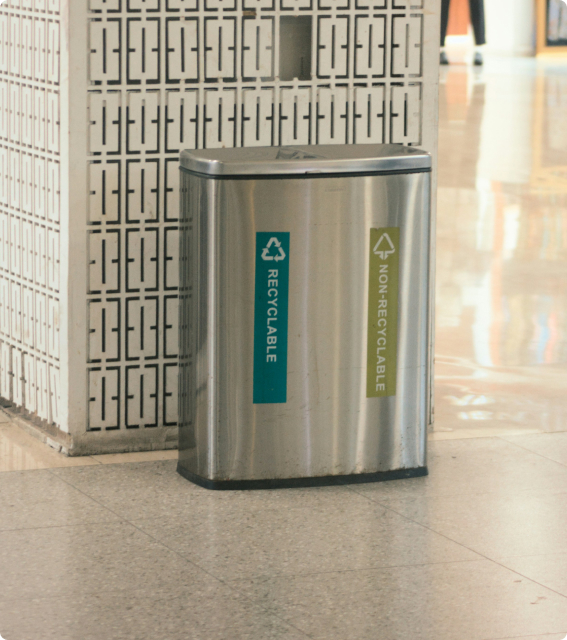
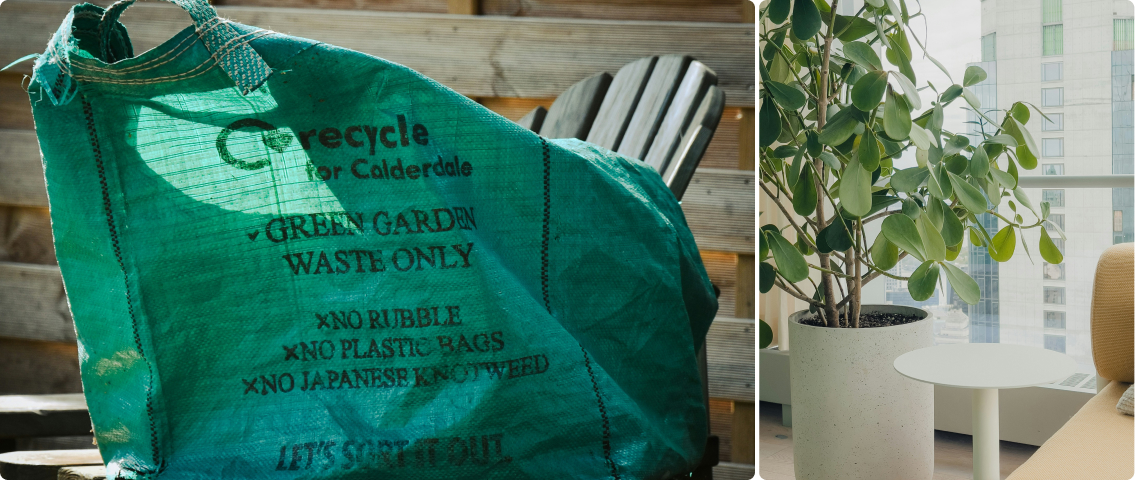
Armed with data, we overhauled the waste collection infrastructure in the facility. Segregation at source was the mantra. We introduced clearly marked, color-coded bins for at least three categories: recyclables (paper, cardboard, certain plastics), organic waste (food scraps, compostables), and landfill waste (non-recyclable trash). These bins were strategically placed for easy access – recycling bins next to printer stations, compost bins in the pantry and cafeteria, etc. We also ensured back-end segregation: working with the waste hauling vendor to provide separate collection carts and storage for each waste type, so that all the effort employees put into sorting wasn’t wasted (quite literally) by mixing later. Where needed, we provided equipment like compactors for recyclables or a composting unit for organics, to manage volume and odor. The physical setup of the office thus became a constant prompt and facilitator for sustainable behavior.
3.3 Vendor Alignment and Green Procurement
Next, we tackled the supply side. Maanicare facilitated discussions and workshops with all key vendors to bring them on the sustainability journey. With the cafeteria/catering provider, we set new guidelines: swap out single-use plastics (cutlery, cups, carry containers) for reusable or biodegradable alternatives, offer incentives for employees who bring their own coffee mugs, and reduce packaging waste by buying in bulk wherever possible. The cleaning contractors were asked to switch to environmentally friendly cleaning agents (reducing chemical pollutants) and to adjust their routines to support waste segregation (like using separate bin liners for different waste types and not mixing them during collection). Office supplies procurement was reviewed – for example, ordering recycled-content paper, refillable pens, and avoiding items with excessive packaging. We established green criteria into vendor contracts and KPIs, meaning vendors would now be evaluated partly on their sustainability performance (e.g., the cafeteria vendor might be measured on reduction in plastic waste or uptake of reusable dishes). This alignment turned vendors from being part of the problem into partners in the solution.
3.4 Employee Engagement & Training
Recognizing that real change happens only when people embrace it, we rolled out an employee engagement campaign. Maanicare helped design interactive training sessions and communications that made sustainability relatable rather than preachy. We organized “lunch and learn” sessions showing what goes in which bin, and why it matters. We shared monthly “Green Tips” via email and on noticeboards – like highlighting how one person’s action (using a reusable water bottle) scales up when many do it. Gamification was used to spur involvement: for instance, inter-department competitions on who could achieve the best recycling rate or reduce printing paper usage, with small rewards and recognition. Importantly, we listened to employee feedback – addressing inconveniences (if any) related to the new system and incorporating good suggestions (like putting a compost bin on every floor, not just in the cafeteria, because people snack at their desks too). By making employees proud participants in the initiative, the changes became much stickier.
3.5 Monthly Metrics and Reporting Integration
To fulfill the client’s need for measurable results, Maanicare established a monthly sustainability dashboard for the facilities. We worked with the waste vendor to get regular reports on quantities of each waste type hauled away. We installed simple measures like keeping track of how many bins of recyclables vs trash were collected, and even weighing certain waste batches when feasible. These figures were compiled to produce metrics such as the waste diversion rate (the percentage of total waste that was recycled or composted rather than landfilled) and the total reduction in waste volume over time. Similarly, for plastic reduction, we tracked procurement of disposables – e.g., how many fewer single-use cups were being bought by the cafeteria now. The metrics were reported monthly to the client’s sustainability team and also fed into their broader ESG reporting system. Over a few months, trends emerged and we could celebrate successes (and identify any areas needing a tweak). The data not only satisfied reporting requirements but also served as a feedback loop to keep the whole organization motivated – seeing a graph of rising recycling rates reinforced that their efforts were making an impact.
The Solution: An Office That Operates on Sustainable Principles
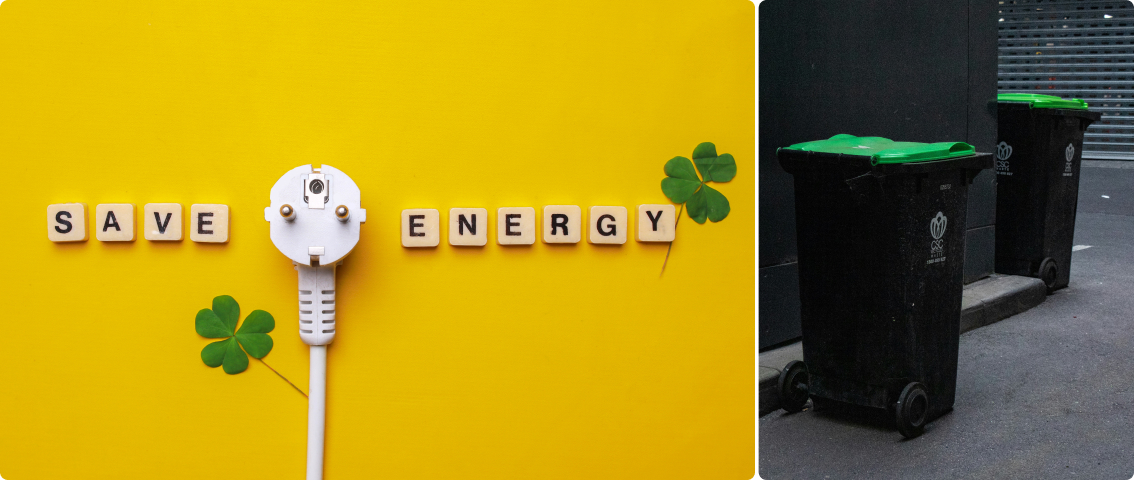
The combined efforts resulted in a facility operations model where sustainability became second nature. What changed tangibly? The office environment now features recycling and compost bins as prominently as trash cans, green reminders in common areas, and employees carrying their company-issued reusable water bottles and coffee mugs. Vendors actively support the cause: the café no longer hands out plastic cutlery by default, and cleaning staff act as on-ground champions, gently guiding anyone who accidentally tosses the wrong item in the wrong bin. There’s a sense of collective responsibility in the air – sustainability is no longer a task, it’s part of the office ethos.

Impact: Measurable Green Gains and a Culture Shift
The results of the sustainability-led operations were impressive, turning initial skepticism into pride:
5.1 Significant Waste Diversion Achieved
Within months, the facility’s waste diversion rate (the share of waste kept out of landfill) climbed substantially. What was once, say, only 20% of waste being recycled jumped to well over double that figure. Tons of paper, plastic, and organic waste that would have been trash were now finding new life through recycling plants or compost instead. This not only reduced the company’s environmental footprint but also often translated into reduced waste disposal costs (since sending waste to landfill is more expensive than recycling in many regions).
5.2 Sharp Decline in Single-Use Plastics
The initiative dramatically cut down single-use plastic consumption in the facilities. For instance, plastic water bottles were virtually eliminated – employees embraced filtered water stations and reusable bottles. The cafeteria’s move to reusable serveware and compostables slashed plastic utensil and cup use by a huge margin (in the range of dozens of thousands of items fewer per month). By tracking procurement data, the client could proudly report a hefty percentage reduction in plastic waste generation, directly tying into their ESG commitments around plastics.
5.3 ESG Data & Reporting-Ready Operations
One of the less visible but crucial outcomes was that the company’s operations became ESG reporting-ready. Every month, they now had credible, audited data to feed into sustainability reports: kilograms of waste recycled, emissions saved via waste reduction (calculated equivalences), and progress toward their targets. During annual ESG reviews and stakeholder meetings, the company could showcase charts and figures from its own offices demonstrating genuine improvement. This transparency and evidence bolstered the company’s reputation – their sustainability claims were backed by hard facts. It even positioned them better for sustainability certifications and improved scores from ESG rating agencies.
5.4 Engaged Employees and Cultural Change
Another impact was on the people. Employees reported higher satisfaction knowing they work in a “green” office. It became a point of pride in company culture – new hires would hear about the eco-friendly practices during onboarding, and many employees became sustainability advocates outside of work too, taking home lessons learned at the office. By empowering employees to be part of the solution, the company saw a cultural shift where bottom-up initiatives (like some teams starting a “no print day” or volunteering for community clean-ups) began to sprout. In short, sustainability-led operations not only saved waste, they strengthened the organizational culture and alignment with the company’s ESG values.
5.5 Strategic Impact for Maanicare
For Maanicare, this project was a testament to our capability to integrate sustainability into facility management effectively. It expanded our portfolio of success stories in ESG implementation at a very practical level. As more companies aim to operationalize their sustainability goals, Maanicare’s hands-on experience in driving measurable change set us apart. This case became a reference for how we can help clients not just set green policies, but actually live them in their day-to-day operations, and prove it.
Key Learnings
- Data Before and After: Conducting a baseline waste audit was pivotal. You can’t manage what you don’t measure – having initial data made goal-setting and progress tracking possible, turning vague goals into specific targets.
- Infrastructure Enables Behavior: If you want people to recycle or reduce waste, make it easy and visible. The right bins, tools, and cues in the environment guide and reinforce the desired behavior.
- All Stakeholders, One Mission: Engaging vendors and employees alike creates an ecosystem of sustainability. Everyone who has a hand in operations needs to be rowing in the same direction for big changes to happen.
- Celebrate and Communicate Wins: Sharing the improvements (like “we recycled X tons last month!” or “plastic usage down by Y%!”) keeps momentum up. It shows everyone that their efforts matter and encourages sustained participation.
Executive Summary

Project
Sustainability-Led Facilities Operations Revamp

Client
Undisclosed ESG-focused enterprise (corporate office setting)

Scope:
Green transformation of facility operations – encompassing waste stream analysis, implementation of waste segregation systems, collaboration with vendors for sustainable practices, introduction of eco-friendly consumables, and development of a metrics/reporting framework for sustainability performance.

Maanicare’s Role:
Sustainability consultant and implementer, responsible for auditing current operations, designing and rolling out new waste management processes, training stakeholders, and establishing data tracking for continuous improvement and reporting.

Outcome:
A measurable leap in environmental performance: significantly higher waste diversion (recycling/composting) rates, drastic reduction in single-use plastic waste, and a fully operational ESG reporting system for facilities – all while fostering a culture of sustainability among employees and service partners.